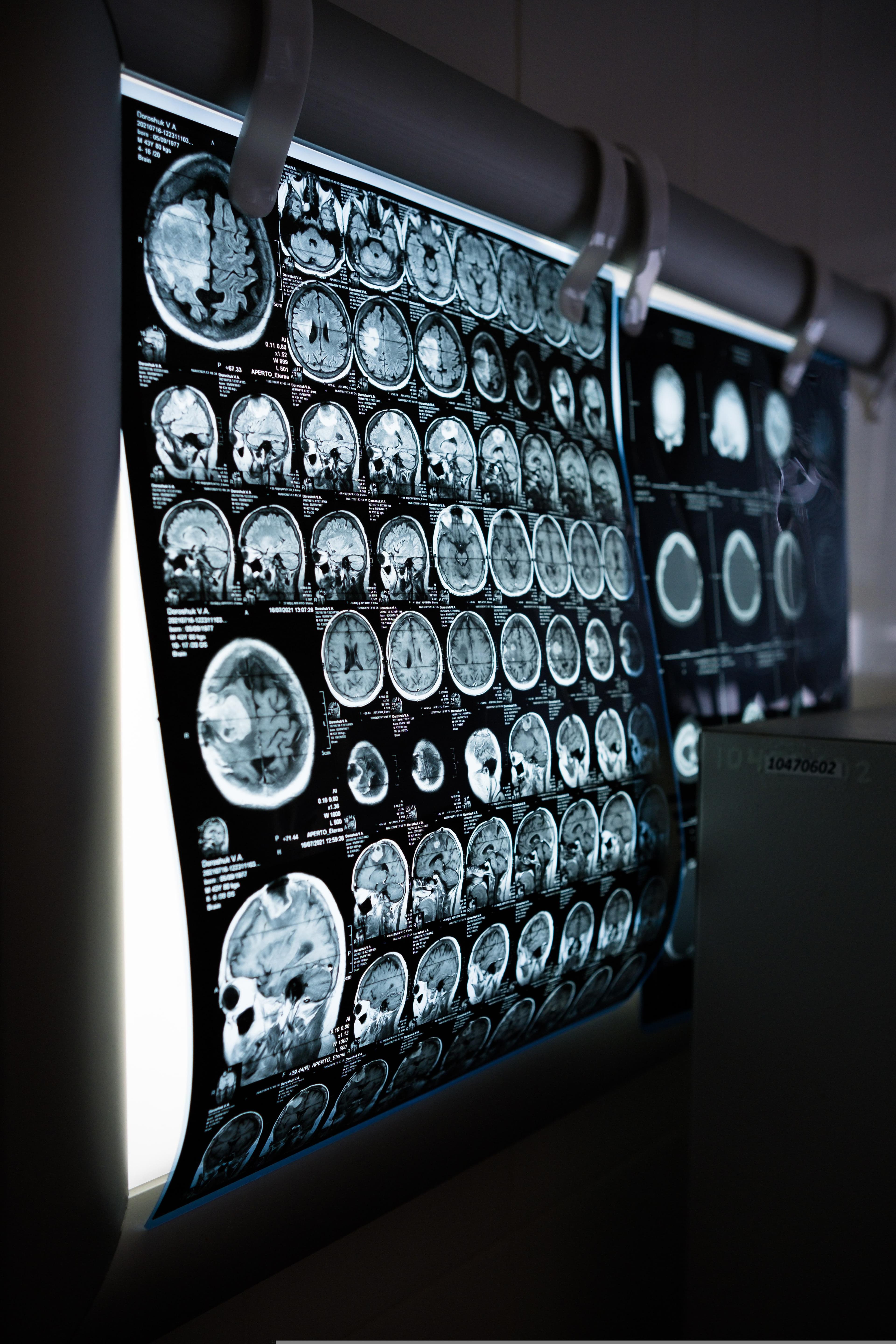
Walk into any major trauma centre in Germany and you will find a multi-slice CT scanner installed within metres of the resuscitation bay - sometimes inside it. Walk into a comparable centre in the United Kingdom and the scanner may be down a corridor, through a set of doors, and shared with the rest of the emergency department. These two arrangements represent more than an architectural preference; they embody a fundamental disagreement about how severely injured patients should be imaged in the first minutes of hospital care. The question of whether every major trauma patient should receive an immediate whole-body CT (WBCT) - head to pelvis in a single contrast-enhanced pass - or whether imaging should be selective and guided by clinical findings from the primary survey, is one of the most consequential debates in contemporary trauma practice. The ATLS course teaches a structured approach built on clinical assessment, plain radiography, and focused ultrasound. Many centres have effectively bypassed this model with a ‘pan-scan’ protocol that replaces clinical reasoning with comprehensive imaging. The evidence for this substitution is far less settled than current practice suggests.
The Rise of the Pan-Scan
The expansion of WBCT in trauma was driven by technological progress and a compelling observational evidence base. As multi-slice CT scanners became faster — capable of scanning the entire torso in under thirty seconds — the logistic barrier to whole-body imaging during initial resuscitation largely disappeared. The landmark study came from Huber-Wagner and colleagues in 2009, published in The Lancet. Using data from the German TraumaRegister DGU, they analysed over 4,600 severely injured patients (ISS ≥ 16) and found that WBCT during trauma resuscitation was associated with a significant increase in probability of survival, with an adjusted odds ratio for mortality of 0.75. They calculated a ‘number needed to scan’ of 17: for every 17 patients who underwent WBCT, one additional life was saved. The study was enormously influential. By 2018, German trauma registry data showed that 79.5% of severely injured patients were receiving WBCT during initial resuscitation.
A follow-up analysis by the same group in 2013, again from the TraumaRegister DGU, extended these findings to haemodynamically unstable patients - a population traditionally considered too unstable to leave the resuscitation bay. They found that WBCT significantly increased survival in both stable and shocked patients, challenging the prevailing dogma that circulatory instability was a contraindication to CT scanning. These registry studies, along with several other observational analyses demonstrating reduced emergency department time and earlier definitive diagnosis, propelled the adoption of WBCT protocols across Europe, Australasia, and parts of North America.
REACT-2: The Only Randomised Controlled Trial
The pivotal moment in this debate came in 2016 with the publication of REACT-2 in The Lancet. This international, multicentre randomised controlled trial, led by Sierink and colleagues from the Academic Medical Center in Amsterdam, is the only RCT to have directly compared immediate WBCT against conventional imaging supplemented with selective CT in major trauma. The trial enrolled patients across four Dutch and one Swiss level I trauma centre. Patients aged 18 or older with compromised vital signs (respiratory rate ≥ 30 or ≤ 10, heart rate ≥ 120, systolic blood pressure ≤ 100 mmHg, estimated blood loss ≥ 500 ml, GCS ≤ 13, or abnormal pupils), clinical suspicion of life-threatening injuries, or high-risk mechanisms were randomised 1:1 to immediate total-body CT or standard ATLS-based imaging with selective CT.
The results were unequivocal on the primary endpoint: in-hospital mortality was 16% in the WBCT group versus 16% in the standard work-up group (p = 0.92). Subgroup analyses in polytrauma patients (ISS ≥ 16) and those with traumatic brain injury showed no difference. There was no mortality benefit at 24 hours or 30 days. The WBCT group did have a shorter time to end of imaging in the trauma room (median 30 minutes versus 35 minutes), but this did not translate into improved outcomes. Critically, radiation exposure was significantly higher in the WBCT group (median 20.9 mSv versus 20.6 mSv), though this headline figure obscures an important detail: 46% of patients randomised to selective imaging ultimately received sequential CT scans of all body regions, effectively undergoing the equivalent of a whole-body scan. For the other 54% who genuinely received selective imaging, their radiation dose was substantially lower, as reflected in the much wider interquartile range.
The trial was not without criticism. Over 300 patients were excluded post-randomisation, including 60 who were judged not to meet inclusion criteria - a decision made by unblinded clinicians who knew the group allocation, raising concerns about selection bias. The inclusion criteria were also modified after enrolment had begun. Several meta-analyses have since attempted to synthesise the observational and trial data, with discordant conclusions: some find pooled odds ratios for mortality of 0.67 to 0.79 favouring WBCT, while others, including the most recent systematic reviews incorporating the REACT-2 data, find no significant difference. The honest assessment is that the observational data suggest benefit, the only RCT does not, and the field remains in genuine equipoise.
The Radiation Question
A standard WBCT delivers approximately 10 to 20 mSv of ionising radiation. For context, the average annual background radiation exposure in the UK is roughly 2.7 mSv. The lifetime attributable cancer risk from a single 20 mSv exposure is small in absolute terms, estimated at around 1 in 1,000, but this risk is not trivial across a population. The trauma cohort skews young: major trauma is disproportionately a disease of adults under 45, meaning any radiation-induced malignancy has decades to declare itself. A German single-centre study of nearly 4,000 WBCT trauma patients found that 3% had a completely inconspicuous primary survey and no trauma-related findings on imaging, while a further 5% had only minor clinical symptoms with no morphological trauma detected on CT. Over 340 patients were discharged directly from the emergency department after their WBCT because there were no grounds for admission. These patients received a significant radiation dose for no diagnostic yield.
The counterargument is that clinical assessment alone is an imperfect triage tool. Occult injuries - particularly to the thoracic aorta, solid abdominal organs, and cervical spine - can be clinically silent on initial presentation and catastrophic if missed. The question is whether the number of clinically significant injuries detected by routine WBCT that would have been missed by selective imaging justifies the radiation exposure to the much larger number of patients in whom CT adds nothing. This is fundamentally a number-needed-to-treat calculation, and the data do not yet provide a confident answer.
The Incidental Findings Problem
An underappreciated consequence of routine WBCT is the discovery of incidental findings unrelated to trauma. Studies report incidental findings in 30 to 50% of trauma WBCT scans, ranging from benign cysts to suspicious masses requiring urgent follow-up. A recent review in PMC highlighted that while a proportion of these findings do warrant intervention, communication and follow-up are consistently poor. The trauma team’s attention is rightly focused on acute injuries, and findings flagged on the radiology report - a renal mass, an aortic aneurysm, a pulmonary nodule - frequently fall through the gaps of care transitions. This creates a medico-legal and ethical problem: once an abnormality has been identified, there is an obligation to act on it, yet the systems to ensure this are inadequately developed in most trauma services. The pan-scan, intended to simplify the diagnostic pathway, paradoxically generates its own cascade of complexity.
The Infrastructure Divide
Practice varies enormously between and within countries. The German model, with in-room or immediately adjacent CT scanners, dedicated radiographers, and protocol-driven scanning, is the product of decades of investment in trauma infrastructure. European guidelines now recommend the use of early WBCT for detection of the source of bleeding in major trauma. The UK model, governed by NICE major trauma guidance and the ATLS framework, generally uses selective imaging following a structured primary and secondary survey, with WBCT employed when clinical suspicion is high. A study from Huber-Wagner’s group demonstrated that scanner location itself affects outcomes: hospitals with CT scanners in the trauma room had shorter times to imaging (mean 17 minutes from admission versus 27 minutes when the scanner was more than 50 metres away), and in adjusted analyses, closer scanner proximity was associated with improved survival. This suggests that the benefit of WBCT may be partly a surrogate for the quality of trauma infrastructure rather than the imaging modality itself.
Special Populations: The Elderly and the Stable
The geriatric trauma population is expanding rapidly - in Australia and New Zealand, there has been a 21% increase in geriatric major trauma presentations over the past four years, with patients over 65 now accounting for nearly one third of all severely injured patients. Older patients sustain different injury patterns (predominantly low-energy falls rather than high-speed impacts), have reduced physiological reserve, and may have blunted clinical signs. A 2025 systematic review by Tang and colleagues examined whether WBCT offers differential benefit in this group compared with selective CT, but found insufficient evidence to draw firm conclusions. The question of whether routine WBCT is justified in haemodynamically stable patients with an unremarkable primary survey is equally unresolved: the available data suggest that clinical examination retains meaningful screening value, and that a significant proportion of WBCT scans in stable patients yield no actionable findings.
What ATLS Candidates Need to Know
The ATLS course, now in its 10th edition, teaches a structured primary survey (ABCDE), adjuncts to the primary survey (chest and pelvis radiographs, eFAST), and a secondary survey followed by definitive imaging as clinically indicated. CT scanning is positioned within this framework as an adjunct to diagnosis, not as a replacement for clinical assessment. ATLS explicitly cautions that patients who are haemodynamically unstable should not be transported to the CT scanner if this would delay life-saving intervention.
For the ATLS examination, candidates should understand several key principles. First, the primary survey remains the foundation of initial trauma assessment, and no imaging modality replaces systematic clinical evaluation. Second, the adjuncts to the primary survey - chest radiograph, pelvis radiograph, and eFAST - are rapid, bedside investigations that can identify immediately life-threatening pathology without leaving the resuscitation bay. Third, CT scanning - whether selective or whole-body - is a secondary investigation performed after life-threatening conditions have been identified and treated, and after the patient is deemed stable enough for transfer. Fourth, haemodynamic instability remains a relative contraindication to CT scanning in the ATLS paradigm, though candidates should be aware that some centres now challenge this position based on registry data.
Beyond the examination itself, ATLS candidates entering clinical practice will encounter enormous institutional variation in CT protocols. Understanding that the debate between whole-body and selective CT is active and unresolved - that observational data suggest benefit while the only RCT does not, and that radiation, cost, and incidental findings are genuine concerns - will equip candidates for informed clinical decision-making. The REACT-2 trial, in particular, is a study that any trauma practitioner should be able to discuss, as it represents the highest level of evidence available on the question and directly challenges assumptions embedded in many institutional protocols.
Synthesis
The honest summary of the evidence is that routine whole-body CT in major trauma probably reduces emergency department time and may detect injuries that would otherwise be missed on initial assessment. Whether this translates into a survival benefit remains unproven by the highest standard of evidence. The observational data, predominantly from the German TraumaRegister, consistently suggest improved survival, but these findings are subject to the selection biases inherent in registry research. The only randomised trial found no mortality difference, higher radiation exposure in the WBCT group, and a high crossover rate in the selective imaging arm that complicates interpretation. What is clear is that WBCT is not a benign investigation: it delivers a meaningful radiation dose, generates a high rate of incidental findings with inadequate follow-up systems, and may encourage a false sense of diagnostic completeness that undermines the careful clinical reasoning at the heart of the ATLS approach. The field needs better evidence on patient selection - identifying who will benefit from comprehensive imaging versus who can be safely managed with selective scanning - rather than a binary debate between ‘scan everyone’ and ‘scan selectively’. Until that evidence arrives, the tension between the clinical pragmatism of the pan-scan and the structured assessment of ATLS will remain one of the defining controversies in acute trauma care.