Introduction: A Problem That Kills Quickly
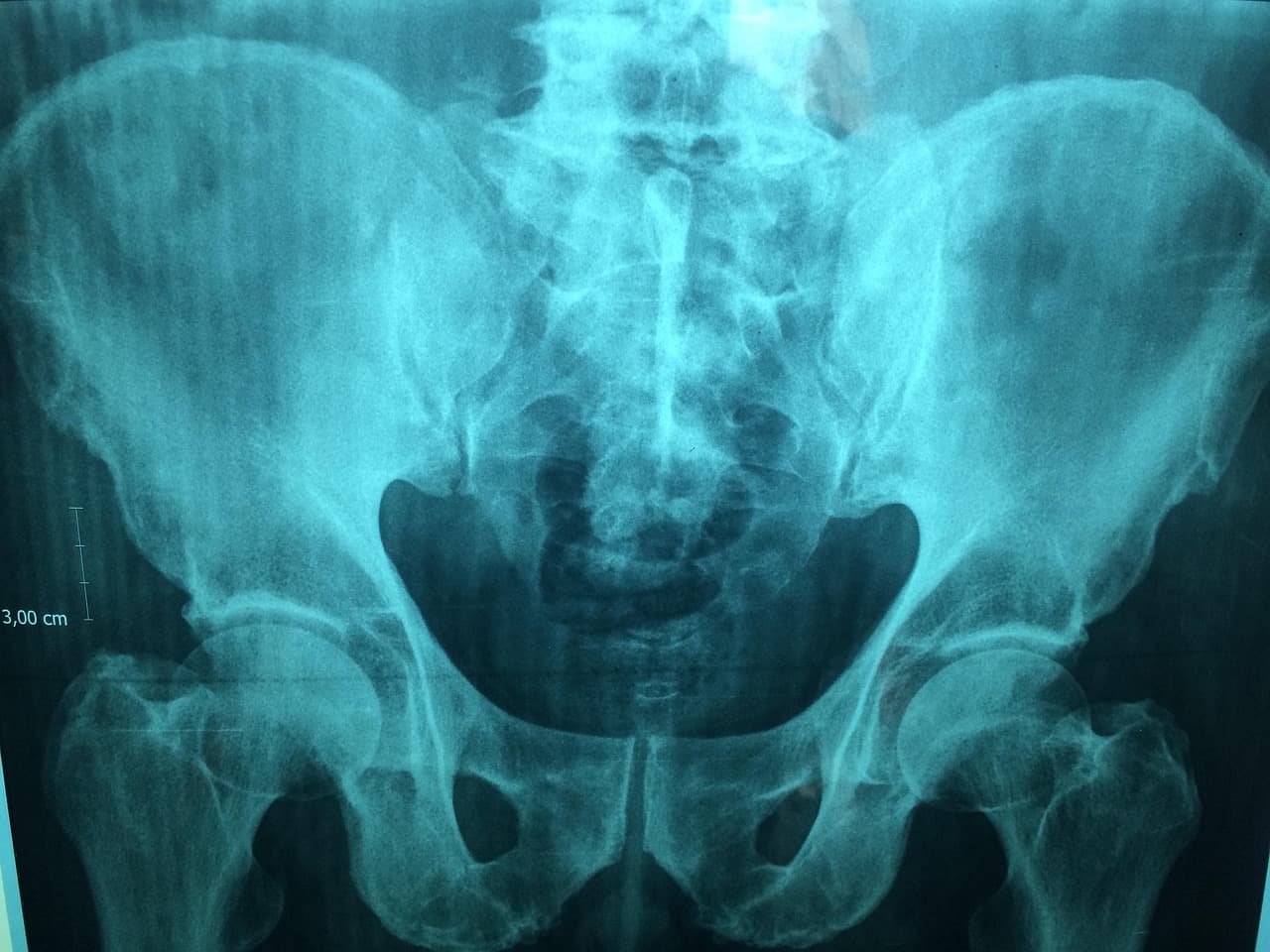
Pelvic fractures account for only three percent of all skeletal injuries, yet they carry a mortality that can exceed forty percent in the haemodynamically unstable patient. The pelvis is an unforgiving anatomical basin - it can accommodate litres of blood, contains no natural tamponade mechanism, and draws from a venous plexus and arterial network that surgeons cannot easily reach. When a patient arrives in the resuscitation bay with a shattered pelvis and haemodynamic instability, the clock is running from the moment of impact.
The question of how best to achieve haemorrhage control in this setting has generated one of the most genuinely contested debates in trauma surgery. Two dominant strategies compete: angioembolisation, which addresses arterial bleeding through catheter-directed techniques, and preperitoneal pelvic packing, which tamponades bleeding through direct surgical compression of the pelvic space. Proponents of each approach defend their position with conviction, and the evidence - though growing - has yet to deliver a definitive verdict. For those preparing for the ATLS exam and for practising trauma surgeons alike, understanding the nuances of this debate is not optional. It is essential.
The Anatomy of the Problem
The pelvis bleeds from three principal sources: the venous plexus surrounding the pelvic viscera, fractured cancellous bone surfaces, and named arterial branches - most commonly the internal iliac system and its tributaries. Historically, it was assumed that arterial bleeding was the predominant killer in pelvic trauma. This assumption drove the early enthusiasm for angioembolisation, which emerged in the 1970s as a minimally invasive means of achieving arterial haemostasis without laparotomy.
However, cadaveric and intraoperative studies have since complicated this picture considerably. Osborn and colleagues, publishing in the Journal of Trauma in 2009, demonstrated that venous and bony bleeding accounts for the majority of pelvic haemorrhage in blunt trauma - potentially as much as eighty to ninety percent of overall blood loss. This finding did not invalidate angioembolisation but fundamentally reframed it: an intervention targeting arterial bleeding was being applied to a problem that was predominantly non-arterial. The implications for patient selection and institutional protocols were significant.
The Case for Angioembolisation
Angioembolisation remains the standard of care in many North American and European trauma centres, and its advocates can draw on a substantial body of evidence. The technique allows direct visualisation of arterial injury, selective occlusion of bleeding vessels, and does so without the physiological insult of laparotomy in an already compromised patient.
Tanizaki and colleagues, in a 2014 study published in Injury, reported mortality rates as low as fourteen percent in haemodynamically unstable pelvic fracture patients treated with early angioembolisation. Centres with rapid catheterisation laboratory access and interventional radiology available around the clock have reported comparable outcomes. The American College of Surgeons has incorporated angioembolisation as a key component of the pelvic haemorrhage algorithm in the ATLS framework, reflecting its status as a mainstream intervention.
The procedure's selective nature is also a genuine advantage. Superselective embolisation preserves collateral circulation and minimises the risk of end-organ ischaemia, a concern when more proximal occlusion is performed. In institutions where the technique is well-established and response times are short, the argument for angioembolisation as first-line arterial control is compelling.
The critical vulnerability, however, is time. In a patient in extremis, the logistics of activating an interventional radiology team, transferring the patient to a suite outside the resuscitation bay, and completing the procedure safely can take sixty minutes or more. For many of these patients, that is time they do not have.
The Resurgence of Preperitoneal Pelvic Packing
Preperitoneal pelvic packing - a technique with origins in European trauma surgery, particularly the work of Pohlemann and colleagues in Germany during the 1990s - has experienced a significant revival over the past fifteen years. The procedure involves a short midline or Pfannenstiel incision, blunt entry into the preperitoneal space, and direct placement of surgical packs to tamponade bleeding from the pelvic floor and posterior space. It does not enter the peritoneal cavity and can be performed rapidly - typically within twenty minutes - even by surgeons without subspecialty training.
The Denver group, led by Ernest Moore and colleagues at Denver Health Medical Center, has been central to the modern evidence base for pelvic packing. Their prospective data, published in the Journal of the American College of Surgeons in 2011, demonstrated that implementation of a pelvic packing protocol was associated with significant reductions in transfusion requirements and a mortality benefit in haemodynamically unstable patients compared to historical cohorts managed with angioembolisation alone. Subsequent publications from the same group reinforced these findings and helped establish the Denver protocol as an influential model for institutional adoption.
The PROPPR trial (Holcomb et al., JAMA, 2015), while not specifically addressing pelvic haemorrhage, provided important context by demonstrating that haemostatic resuscitation with balanced blood product ratios was central to survival in major haemorrhage — a principle that applies with particular force to pelvic trauma, where early and aggressive resuscitation runs in parallel with surgical control.
A False Binary
One of the more important intellectual developments in this field has been the recognition that framing the debate as packing versus embolisation is clinically misleading. These are not mutually exclusive strategies, and the patients who present with unstable pelvic fractures are not a homogeneous population.
Hagiwara and colleagues published a landmark series in the Journal of Trauma and Acute Care Surgery in 2014 demonstrating that patients with active arterial extravasation on CT had a dramatically different haemodynamic trajectory to those without - and that this distinction had meaningful implications for the sequencing of interventions. In patients with arterial injury, angioembolisation after packing offered superior outcomes compared to either modality alone.
This has led many high-volume trauma centres to adopt hybrid protocols in which preperitoneal packing is performed as an immediate bridge — gaining rapid haemostatic control while the patient is resuscitated - followed by angioembolisation if arterial injury is identified. The Glasgow group, and centres in Tokyo and Amsterdam, have published institutional experiences demonstrating the feasibility and potential efficacy of this combined approach.
The challenge lies in making these sequencing decisions in real time, with incomplete information, in a patient whose physiology is deteriorating. The role of whole-body CT - and specifically whether it delays or informs intervention - remains a source of genuine institutional variation.
The Role of Pelvic Binders and External Fixation
No discussion of pelvic haemorrhage control would be complete without acknowledging the role of mechanical stabilisation. Circumferential pelvic compression devices - pelvic binders - are now standard in prehospital and early in-hospital care for suspected pelvic ring injuries. Their mechanism is partially haemostatic: by reducing pelvic volume, they limit the potential space available for haematoma expansion and may facilitate clot formation.
However, the evidence that binders independently reduce mortality is inconsistent. Chesser and colleagues, writing in Emergency Medicine Journal in 2012, found that appropriately applied binders reduced displacement in vertically unstable fractures, but their effect on transfusion requirement and survival remains debated. The more widely accepted view is that binders buy time and reduce immediate haemorrhage rather than achieving definitive control.
External fixation has a more established role in open book pelvic injuries, where restoration of the pelvic ring volume is mechanically achievable. In complex posterior ring disruptions, however, anterior fixation alone is insufficient, and internal fixation or packing becomes necessary to address the posterior haemorrhage that these injuries reliably generate.
Implications for ATLS Candidates
For those preparing for the ATLS examination, pelvic haemorrhage sits at the intersection of several core domains: primary survey and haemorrhage control, damage control surgery principles, and the management of the patient in extremis. The current ATLS 11th Edition positions pelvic fracture haemorrhage as a discrete clinical challenge with specific management priorities.
Candidates should understand the classification of pelvic ring injuries, particularly the Young-Burgess system and its relationship to haemorrhage risk. They should be familiar with the indications for pelvic binder application and its limitations, the role of preperitoneal packing as a surgical damage control manoeuvre, and the circumstances under which angioembolisation should be considered - recognising that institutional capacity will influence these decisions in practice.
The broader principle - that mechanical haemorrhage control precedes resuscitation, and that resuscitation runs in parallel with definitive intervention - is axiomatic in ATLS teaching and applies here with particular clarity.
Conclusion: Evidence in Progress
Pelvic haemorrhage in trauma remains one of the genuinely unsolved problems in acute surgery. The debate between packing and embolisation has moved from adversarial to collaborative, with the best-evidenced centres now deploying both strategies in a carefully sequenced protocol. What the evidence consistently supports is speed, systematic decision-making, and the avoidance of delay at every stage of the pathway.
For the trauma surgeon and the ATLS candidate, the lesson is not that one technique has prevailed. It is that understanding the physiology of the injury, the limitations of each intervention, and the importance of institutional preparedness is what defines effective care - and effective examination performance.