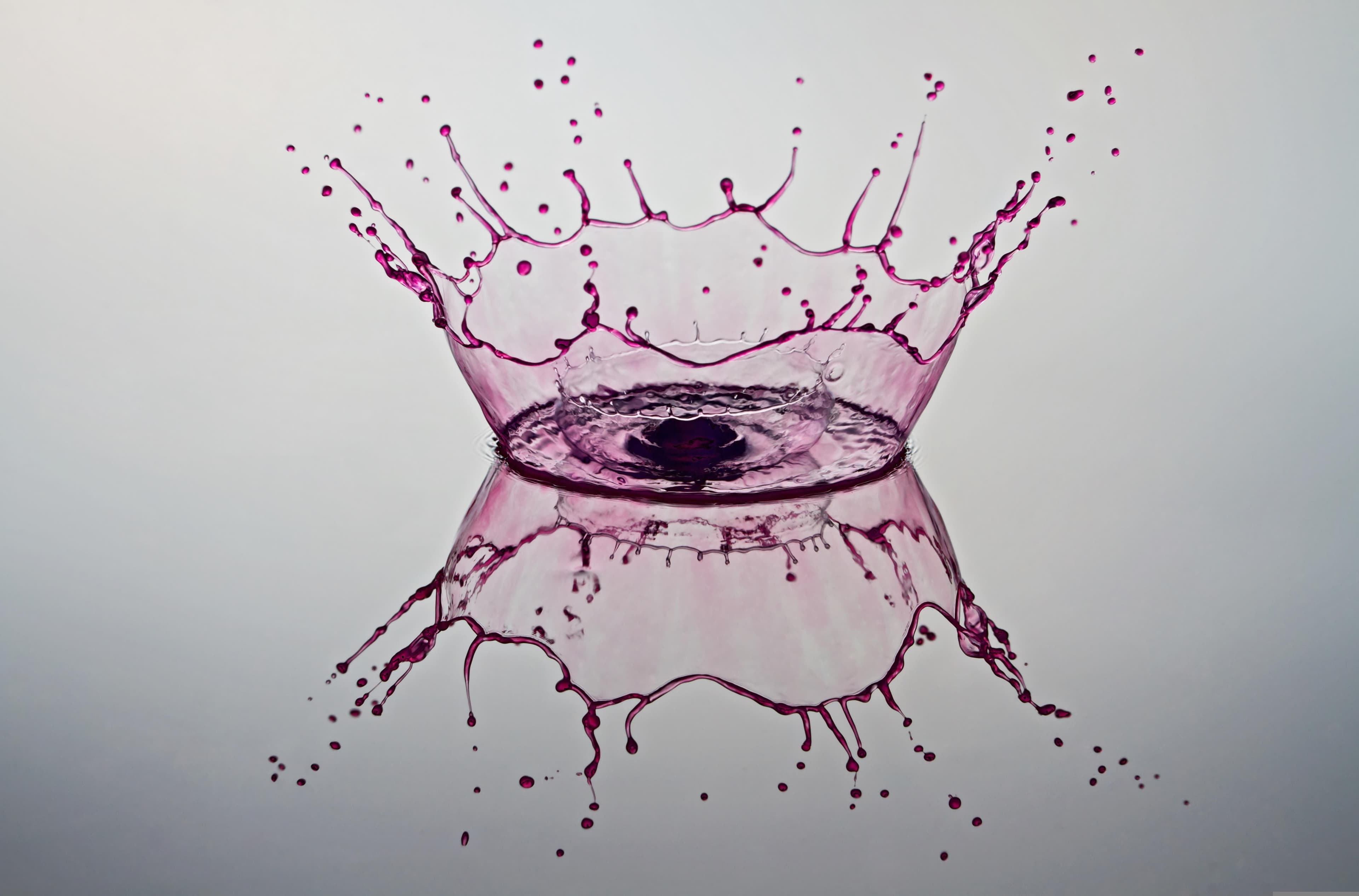
The Allure of the Synthetic Bleed
If you follow the recent dispatches from the intersection of health professions education and biomedical engineering, you have likely encountered the latest technological marvel sweeping the headlines. As reported recently in widespread syndicated news stories, researchers at Nottingham Trent University have developed eerily lifelike, 3D-printed torsos designed specifically for trauma surgery training. These highly advanced models do not simply look like human anatomy; they behave like it. They feature beating hearts, expanding lungs, and are engineered to pump synthetic blood from catastrophic chest wounds, forcing trainee medics to perform emergency interventions against the clock.
The immediate reaction from the public and the medical community alike is predictably enthusiastic. It is an undeniably magnificent feat of engineering. The visual of a surgical trainee, bathed in synthetic blood, clamping a silicone aorta under the glare of theatre lights, presents a compelling narrative of cutting-edge preparedness.
However, as clinical educators tasked with the design of curricula and the rigorous assessment of medical competency, we are obligated to look past the visceral spectacle. We must ask a fundamental, perhaps controversial, question: Is the pursuit of extreme physical realism in simulation actually translating into safer, more effective patient care, or are we simply investing millions into high-tech theatrical props?
The Epistemology of Realism: Face Validity vs. Construct Validity
To dissect this issue, we must first address the terminology that dominates simulation-based education. When we speak of "fidelity," we often conflate engineering fidelity (how much the simulator looks and feels like the real thing) with psychological fidelity (how accurately the simulation captures the cognitive and emotional demands of the real clinical environment).
The bleeding torsos from Nottingham Trent University possess immense engineering fidelity. They score exceptionally high on face validity - that is, to the lay observer and the participant, the setup looks incredibly authentic. But face validity is widely recognized as the weakest form of validity evidence in educational assessment.
What we desperately require is construct validity and predictive validity. Does the ability to rapidly suture a 3D-printed synthetic heart predict a surgeon's ability to save a human life in a chaotic trauma bay? The unsettling answer is that the correlation is far weaker than we might hope.
When we rely heavily on these physical models, we risk committing the error of construct underrepresentation. We isolate the mechanical act of surgery from the complex, messy, and inherently human reality in which that surgery occurs. Stitching a synthetic vessel is a psychomotor skill. Running a trauma code is a complex, multi-dimensional clinical performance. The two are not synonymous.
The Illusion of the Solitary Surgeon
The underlying pedagogy of focusing so intensely on the physical trauma simulator inadvertently reinforces an outdated and dangerous archetype: the solitary, heroic surgeon. The narrative suggests that the primary barrier to patient survival in penetrating trauma is the speed and manual dexterity of the individual holding the scalpel.
Anyone who has spent time at the head of the bed in an emergency department resuscitation room or an intensive care unit knows this to be a fallacy.
When a patient arrives with a catastrophic hemorrhage, the subsequent cascade of events is a fragile ecosystem. The success of a resuscitative thoracotomy or damage-control surgery is almost entirely dependent on non-technical skills (NTS). It relies on the rapid establishment of a shared mental model among a disparate group of professionals who may have never worked together before. It relies on closed-loop communication, the mitigation of ambient noise, the allocation of cognitive bandwidth, and the seamless integration of the anesthetist, the scrub nurses, the operating department practitioners (ODPs), and the blood bank.
A surgeon can possess the finest manual dexterity in the hospital, but if they cannot communicate effectively with the anesthesia team regarding resuscitation targets, or if they succumb to cognitive overload and lose situational awareness, the patient will not survive.
By prioritizing the physical realism of the "bleed," we inadvertently direct our educational resources - both financial and cognitive - away from these vital human factors. We risk training technicians capable of fixing a plumbing issue, rather than clinicians capable of managing a crisis.
The Phenomenological Reality of Trauma
To view this through a more qualitative lens, consider the phenomenological experience of a real trauma resuscitation. The stress experienced by a clinician in that moment is not merely a reaction to the sight of blood. It is an emergent property of the entire environment.
It is the distress of the pre-hospital team handing over the patient; it is the ethical weight of the decision to open the chest; it is the complex discourse that occurs over the sterile drape. A 3D-printed torso, no matter how much warm red fluid it expels, remains a piece of silicone. The trainee fundamentally knows that if they fail, the model will be washed, resealed, and used again tomorrow. The profound existential weight of a human life is absent.
Therefore, creating a physically stressful environment with fake blood is an artificial proxy for psychological stress. Ironically, we can often generate much higher psychological fidelity using low-tech physical models coupled with highly immersive, rigorous role-playing and robust scenario design. A simple, low-cost manikin, embedded within a well-scripted scenario where faculty members introduce standardized communication breakdowns or ethical dilemmas, can provoke a far more authentic cognitive load than a standalone bleeding torso.
The Opportunity Cost in Curriculum Design
We must also confront the stark realities of healthcare economics and educational funding. The research, development, procurement, and ongoing maintenance of these hyper-realistic simulators require astronomical budgets. These are funds that are subsequently unavailable for other, potentially more impactful, educational interventions.
When we integrate a tool into a curriculum, we must justify its return on investment. If our goal is to improve trauma outcomes, the evidence base increasingly points toward the impact of multidisciplinary team training, human factors engineering, and the rigorous assessment of non-technical skills.
Are we starving our faculty development programs and our inter-professional communication workshops to fund the latest iteration of a synthetic bleeding heart?
This is not to say that technical skills training is irrelevant. Of course, a surgeon must know how to hold a needle driver and navigate human anatomy. However, the plateau of learning for these psychomotor skills is often reached with far less sophisticated - and far less expensive - models. The marginal gain achieved by moving from a standard animal tissue model or a basic synthetic block to a highly complex, 3D-printed bleeding torso is likely minimal when compared to the vast improvements that can be realized through dedicated cognitive and team-based training.
Redefining Simulation in the Modern Era
The development of the Nottingham Trent University torsos should be celebrated as a triumph of biomedical engineering. It is a fascinating application of 3D printing and material science. However, as educators, we must be careful not to let the brilliance of the engineering blind us to the core principles of pedagogy.
We must shift the discourse away from "How real does the simulator look?" to "How effectively does this simulation prepare our teams for the complexities of clinical reality?"
True readiness for the trauma bay is not found in the perfect replication of a physical wound. It is found in the resilience of the team, the clarity of communication, and the deeply ingrained non-technical skills that allow a group of individuals to function as a cohesive, life-saving unit under the most extreme pressure imaginable.
Until our simulation suites and assessment metrics reflect the primacy of these human elements, we are simply playing an incredibly expensive game of make-believe. We owe it to our trainees, and more importantly, to our patients, to ensure that our educational strategies are grounded in robust evidence and validity, rather than the seductive illusion of physical fidelity.